
Contact Us
- Phone:+86 17702828378
- WeChat:+86 17702828378
- WA:+86 17702828378
- Mail:sales@yusntech.com
- Address:Room 3, Floor 1, Building 13, No. 69, East Section of Hangkong Road, Dongsheng Subdistrict, Shuangliu District, Chengdu City, Sichuan Province.
Low Noise Amplifiers
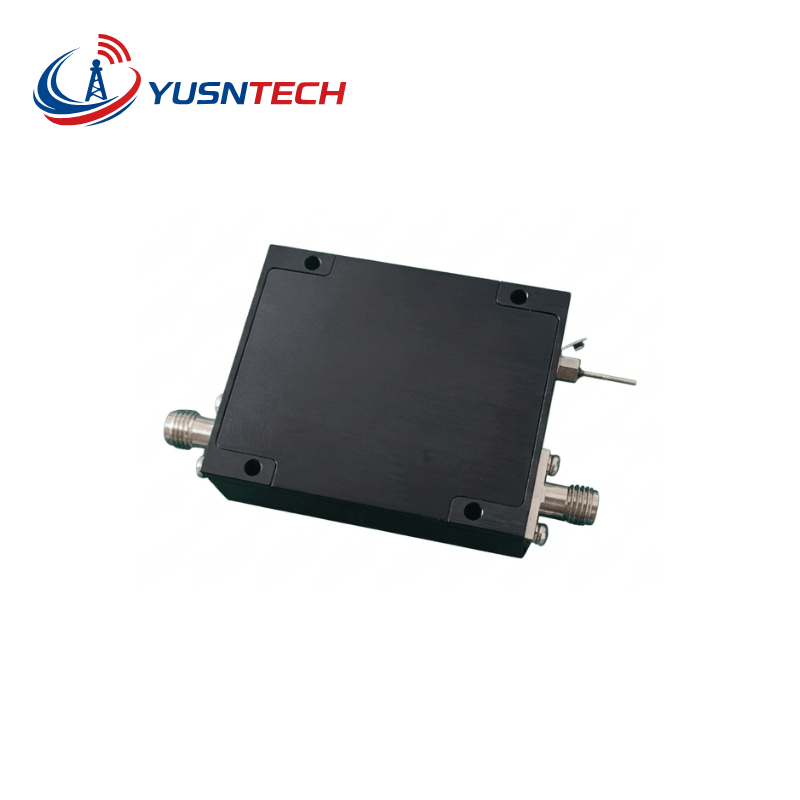
Yusntech Low Noise Amplifiers (LNAs) are designed to enhance weak RF and microwave signals while maintaining minimal noise contribution across frequencies from kHz ranges up to 70 GHz. Featuring low noise figure, high gain, excellent gain flatness, and compact designs, these amplifiers are ideal for radar, satellite communications (SATCOM), electronic warfare (EW), wireless communications, test & measurement, aerospace, and defense applications. Custom frequency bands, gain levels, connectors, and packaging options are available.
Features
- Ultra-Low Noise Figure
- High Gain Flatness
- High Dynamic Range
- Internal Protection
- Ruggedized Packaging
Applications
- Satellite Ground Terminals
- 5G/6G Receivers
- Radar Receivers
- Radio Astronomy
- Electronic Support Measures (ESM)
Model↑↓ | Freq. (GHz) | Gain (dB) | P1dB (dBm) | NF (dB) | VSWR | Voltage (V) | Connector | Inquiry |
|---|---|---|---|---|---|---|---|---|
| YSLA30-1K-3-4 | 1 KHz-3 | 30 | 10 | 4.0 | 1.5:1 | 12 | SMA | Inquiry |
| YSLA30-2K-1-2R5 | 2 KHz-1 | 30 | 10 | 2.5 | 1.5:1 | 12 | SMA | Inquiry |
| YSLA32-10K-2R5-2R5 | 10 KHz-2.5 | 32 | 13 | 2.5 | 1.5:1 | 12 | N-2.92 mm | Inquiry |
| YSLA28-50K-20-3 | 50 KHz-20 | 28 | 15 | 3.0 | 1.5:1 | 12 | SMA | Inquiry |
| YSLA45-50K-20-3 | 50 KHz-20 | 45 | 15 | 3.0 | 1.5:1 | 12 | SMA | Inquiry |
| YSLA27-75K-43R5-4R5 | 75 KHz-43.5 | 27 | 13 | 4.5 | 1.8:1 | 5 | 2.92 mm | Inquiry |
| YSLA38-75K-43R5-4R5 | 75 KHz-43.5 | 38 | 13 | 4.5 | 1.8:1 | 5 | 2.92 mm | Inquiry |
| YSLA25-75K-50-5 | 75 KHz-50 | 25 | 13 | 5.0 | 1.8:1 | 5 | 2.4 mm | Inquiry |
| YSLA35-75K-50-5 | 75 KHz-50 | 35 | 13 | 2.5 | 1.5:1 | 12 | SMA | Inquiry |
| YSLA60-100K-1-2R5 | 100 KHz-1 | 60 | 12 | 2.5 | 1.5:1 | 12 | SMA | Inquiry |
| YSLA40-100K-1R5-4 | 100 KHz-1.5 | 40 | 12 | 4.0 | 1.5:1 | 12 | SMA | Inquiry |
| YSLA50-100K-1R8-4 | 100 KHz-1.8 | 50 | 12 | 4.0 | 1.5:1 | 12 | SMA | Inquiry |
| YSLA32-100K-3-2R8 | 100 KHz-3 | 32 | 13 | 2.8 | 1.5:1 | 5 | SMA | Inquiry |
| YSLA25-100K-8-3R5 | 100 KHz-8 | 25 | 13 | 3.5 | 1.8:1 | 12 | SMA | Inquiry |
| YSLA16-10M-1-2 | 0.01-1 | 16 | 18 | 2.0 | 2.0:1 | 12 | SMA | Inquiry |
| YSLA44-10M-1-1R5 | 0.01-1 | 44 | 20 | 1.5 | 1.5:1 | 12 | SMA | Inquiry |
| YSLA45-10M-6-5 | 0.01-6 | 45 | 17 | 5.0 | ±2.0 | 12 | 2.92 mm | Inquiry |
| YSLA40-10M-10-2R5 | 0.01-10 | 40 | 20 | 2.5 | 1.8:1 | 5 | SMA | Inquiry |
| YSLA30-10M-12-4R5 | 0.01-12 | 30 | 10 | 4.5 | 1.8:1 | 5 | SMA | Inquiry |
| YSLA30-10M-20-5R5 | 0.01-20 | 30 | 28 | 5.5 | 2.0:1 | 12 | SMA | Inquiry |
| YSLA40-10M-20-5 | 0.01-20 | 40 | 14 | 5.0 | 1.8:1 | 12 | SMA | Inquiry |
| YSLA41-10M-30-5R5 | 0.01-30 | 41 | 28 | 5.5 | 2.0:1 | 12 | 2.92 mm | Inquiry |
| YSLA27-10M-40-6 | 0.01-40 | 27 | 21 | 6.0 | 2.5:1 | 12 | 2.92 mm | Inquiry |
| YSLA25-10M-43R5-4R5 | 0.01-43.5 | 25 | 15 | 4.5 | 1.8:1 | 5 | 2.92 mm | Inquiry |
| YSLA27-10M-43R5-5 | 0.01-43.5 | 27 | 20 | 5.0 | 2.5:1 | 12 | 2.92 mm | Inquiry |
| YSLA35-10M-43R5-4R5 | 0.01-43.5 | 35 | 15 | 4.5 | 1.8:1 | 5 | 2.92 mm | Inquiry |
| YSLA50-10M-43R5-4R5 | 0.01-43.5 | 50 | 15 | 4.5 | 1.8:1 | 5 | 2.92 mm | Inquiry |
| YSLA23-10M-50-4R5 | 0.01-50 | 23 | 13 | 4.5 | 1.8:1 | 5 | 2.4 mm | Inquiry |
| YSLA27-10M-50-5 | 0.01-50 | 27 | 20 | 5.0 | 2.5:1 | 12 | 2.4 mm | Inquiry |
| YSLA32-10M-50-5 | 0.01-50 | 32 | 21 | 5.0 | 2.5:1 | 12 | 2.4 mm | Inquiry |
| YSLA32-10M-50-6 | 0.01-50 | 32 | 19 | 6.0 | 1.9:1 | 12 | 2.4 mm | Inquiry |
| YSLA35-10M-50-4R5 | 0.01-50 | 35 | 13 | 4.5 | 1.8:1 | 5 | 2.4 mm | Inquiry |
| YSLA44-10M-50-6 | 0.01-50 | 44 | 21 | 6.0 | 2.5:1 | 12 | 2.4 mm | Inquiry |
| YSLA50-10M-50-4R5 | 0.01-50 | 50 | 13 | 4.5 | 1.8:1 | 5 | 2.4 mm | Inquiry |
| YSLA25-10M-67-5 | 0.01-67 | 25 | 15 | 5.0 | 2.0:1 | 12 | 1.85 mm | Inquiry |
| YSLA18-10M-70-5 | 0.01-70 | 18 | 15 | 5.0 | 2.5:1 | 12 | 1.85 mm | Inquiry |
| YSLA30-10M-70-5R5 | 0.01-70 | 30 | 17 | 5.5 | 2.0:1 | 8 | 1.85 mm | Inquiry |
| YSLA50-10M-70-5R5 | 0.01-70 | 50 | 17 | 5.5 | 2.0:1 | 8 | 1.85 mm | Inquiry |
| YSLA32-20M-3-2R5 | 0.02-3 | 32 | 13 | 2.5 | 1.5:1 | 5/12 | SMA | Inquiry |
| YSLA25-20M-6-2R5 | 0.02-6 | 25 | 13 | 2.5 | 1.5:1 | 5/12 | SMA | Inquiry |
| YSLA45-30M-18-2R5 | 0.03-18 | 45 | 15 | 2.5 | 1.5:1 | 12 | SMA | Inquiry |
| YSLA33-50M-4-2R5 | 0.05-4 | 33 | 13 | 2.5 | 1.5:1 | 5/12 | SMA | Inquiry |
| YSLA21-R1-3-1R3 | 0.1-3 | 21 | 20 | 1.3 | 1.5:1 | 5 | SMA | Inquiry |
| YSLA30-R1-3R5-1 | 0.1-3.5 | 30 | 18 | 1.0 | 1.5:1 | 5 | SMA | Inquiry |
| YSLA60-R1-3R5-1R5 | 0.1-3.5 | 60 | 20 | 1.5 | 1.5:1 | 5 | SMA | Inquiry |
| YSLA25-R1-8R5-4 | 0.1-8.5 | 25 | 15 | 4.0 | 1.5:1 | 5 | SMA | Inquiry |
| YSLA30-R1-8R5-4 | 0.1-8.5 | 30 | 15 | 4.0 | 1.5:1 | 5/12 | N-2.92 mm | Inquiry |
| YSLA30-R1-12-5R5 | 0.1-12 | 30 | 24 | 5.5 | 2.0:1 | 15 | SMA | Inquiry |
| YSLA30-R1-18-1R8 | 0.1-18 | 30 | 15 | 1.8 | 2.3:1 | 12 | SMA | Inquiry |
| YSLA30-R1-18-2R5 | 0.1-18 | 30 | 15 | 2.5 | 1.5:1 | 12 | SMA | Inquiry |
| YSLA33-R1-18-5R5 | 0.1-18 | 33 | 26 | 5.5 | 2.5:1 | 12 | SMA | Inquiry |
| YSLA40-R1-18-2R5 | 0.1-18 | 40 | 15 | 2.5 | 1.5:1 | 12 | SMA | Inquiry |
| YSLA30-R1-20-5R5 | 0.1-20 | 30 | 20 | 5.5 | 2.2:1 | 12 | SMA | Inquiry |
| YSLA32-R1-20-4R5 | 0.1-20 | 32 | 15 | 4.5 | 2.0:1 | 15 | SMA | Inquiry |
| YSLA18-R1-26R5-6 | 0.1-26.5 | 18 | 14 | 6.0 | 2.0:1 | 12 | SMA | Inquiry |
| YSLA27-R1-26R5-4 | 0.1-26.5 | 27 | 21 | 4.0 | 2.2:1 | 12 | 2.92 mm | Inquiry |
| YSLA38-R1-26R5-6 | 0.1-26.5 | 38 | 15 | 6.0 | 2.0:1 | 15 | 2.92 mm | Inquiry |
| YSLA43-R1-26R5-3 | 0.1-26.5 | 43 | 15 | 3.0 | 1.8:1 | 12 | 2.92 mm | Inquiry |
| YSLA17-R1-40-4R5 | 0.1-40 | 17 | 20 | 4.5 | 2.0:1 | 12 | 2.92 mm | Inquiry |
| YSLA28-R1-40-6 | 0.1-40 | 28 | 20 | 6.0 | 2.4:1 | 12 | 2.92 mm | Inquiry |
| YSLA30-R1-40-7R5 | 0.1-40 | 30 | 15 | 7.5 | 2.5:1 | 15 | 2.92 mm | Inquiry |
| YSLA30-R1-70-6 | 0.1-70 | 30 | 15 | 6.0 | 2.6:1 | 12 | 1.85 mm | Inquiry |
| YSLA30-R1-70-6A | 0.1-70 | 30 | 15 | 6.0 | 2.6:1 | 12 | 1.85 mm | Inquiry |
| YSLA35-R4-7-1R1 | 0.4-7 | 35 | 18 | 1.1 | 1.8:1 | 5 | SMA | Inquiry |
| YSLA50-R5-3-R8 | 0.5-3 | 50 | 20 | 0.8 | 1.5:1 | 5 | SMA | Inquiry |
| YSLA40-R5-6-2 | 0.5-6 | 40 | 20 | 2.0 | 1.5:1 | 5 | SMA | Inquiry |
| YSLA30-1-18-2R5 | 1-18 | 30 | 17 | 2.5 | 1.5:1 | 12 | SMA | Inquiry |
| YSLA40-1-18-1R8 | 1-18 | 40 | 17 | 1.8 | 1.5:1 | 5 | SMA | Inquiry |
| YSLA45-1-18-2R5 | 1-18 | 45 | 17 | 2.5 | 1.5:1 | 12 | SMA | Inquiry |
| YSLA55-1-18-2R5 | 1-18 | 55 | 17 | 2.5 | 1.5:1 | 12 | SMA | Inquiry |
| YSLA60-1R1-1R7-R8 | 1.1-1.7 | 60 | 20 | 0.8 | 1.5:1 | 5 | SMA | Inquiry |
| YSLA25-2-43R5-4 | 2-43.5 | 25 | 13 | 4.0 | 1.8:1 | 5 | 2.92 mm | Inquiry |
| YSLA35-2-43R5-4 | 2-43.5 | 35 | 13 | 4.0 | 1.8:1 | 5 | 2.92 mm | Inquiry |
| YSLA50-2-43R5-4 | 2-43.5 | 50 | 13 | 4.0 | 1.8:1 | 5 | 2.92 mm | Inquiry |
| YSLA25-2-50-4 | 2-50 | 25 | 13 | 4.0 | 1.8:1 | 5 | 2.4 mm | Inquiry |
| YSLA30-2-50-4 | 2-50 | 50 | 13 | 4.0 | 1.8:1 | 5 | 2.4 mm | Inquiry |
| YSLA35-2-50-4 | 2-50 | 35 | 13 | 4.0 | 1.8:1 | 5 | 2.4 mm | Inquiry |
| YSLA30-3-67-5 | 3-67 | 30 | 17 | 5.0 | 2.0:1 | 8 | 1.85 mm | Inquiry |
| YSLA30-4-18-2R8 | 4-18 | 30 | 13 | 2.8 | 1.5:1 | 4 | SMA | Inquiry |
| YSLA25-5-25-5 | 5-25 | 25 | 19 | 5.0 | 1.7:1 | 5 | SMA | Inquiry |
| YSLA30-6-18-2R5 | 6-18 | 30 | 17 | 2.5 | 1.5:1 | 12 | SMA | Inquiry |
| YSLA35-6-18-1R5 | 6-18 | 35 | 19 | 1.5 | 1.5:1 | 12 | SMA | Inquiry |
| YSLA50-6-18-2R5 | 6-18 | 50 | 17 | 2.5 | 1.5:1 | 12 | SMA | Inquiry |
| YSLA30-8-12-2R5 | 8-12 | 30 | 17 | 2.5 | 1.5:1 | 12 | SMA | Inquiry |
| YSLA45-8-12-2R5 | 8-12 | 45 | 17 | 2.5 | 1.5:1 | 12 | SMA | Inquiry |
| YSLA20-8-40-5 | 8-40 | 20 | 16 | 5 | 2.5:1 | 12 | 2.4 mm2.92 mm | Inquiry |
| YSLA45-15-50-4 | 15-50 | 45 | 13 | 4.0 | 2.0:1 | 5 | 2.4 mm | Inquiry |
| YSLA35-18-26R5-1R8 | 18-26.5 | 35 | 18 | 1.8 | 1.5:1 | 5 | 2.92 mm | Inquiry |
| YSLA33-18-40-3R5 | 18-40 | 33 | 13 | 3.5 | 1.8:1 | 5 | 2.92 mm | Inquiry |
| YSLA40-18-40-3R5 | 18-40 | 40 | 13 | 3.5 | 1.8:1 | 5 | 2.92 mm | Inquiry |
| YSLA60-18-40-4 | 18-40 | 60 | 20 | 4.0 | 1.8:1 | 8 | 2.92 mm | Inquiry |
| YSLA40-18-40-3 | 18-44 | 40 | 16 | 3.0 | 1.8:1 | 5 | 2.92 mm | Inquiry |
| YSLA30-18-50-4 | 18-50 | 30 | 17 | 4.0 | 1.5:1 | 5 | 2.4 mm | Inquiry |
| YSLA38-22-44-2 | 22-44 | 38 | 17 | 2.0 | 1.5:1 | 5 | 2.4 mm | Inquiry |
| YSLA38-30-50-2R5 | 30-50 | 38 | 15 | 2.5 | 1.8:1 | 5 | 2.4 mm | Inquiry |
| YSLA30-37-67-5R5 | 37-67 | 30 | 20 | 5.5 | 1.8:1 | 5 | 1.85 mm | Inquiry |
| YSLA38-40-60-2R5 | 40-60 | 38 | 7 | 2.5 | 1.8:1 | 5 | 1.85 mm | Inquiry |
| YSLA33-40-67-5R5 | 40-67 | 33 | 15 | 5.5 | 1.8:1 | 5 | 1.85 mm | Inquiry |
| YSLA30-50-70-5R5 | 50-70 | 30 | 20 | 5.5 | 2.0:1 | 5 | 1.85 mm | Inquiry |
FAQ
A Low Noise Amplifier (LNA) is an RF and microwave amplifier designed to amplify extremely weak signals while adding minimal noise to the signal path. LNAs are typically installed at the front end of receiver systems to improve overall sensitivity and signal quality.
The first amplifier in a receiver chain has the greatest impact on system noise performance. A high-quality Low Noise Amplifier improves receiver sensitivity, enhances signal-to-noise ratio (SNR), and helps detect weak signals in challenging RF environments.
Low Noise Amplifiers are widely used in satellite communications (SATCOM), radar systems, wireless communications, electronic warfare (EW), aerospace electronics, test and measurement equipment, GPS receivers, microwave links, and RF monitoring systems.
Noise Figure (NF) measures the amount of noise introduced by an amplifier. Lower noise figure values indicate better performance. For high-sensitivity receiver systems, a low-noise amplifier with a low NF is critical for maximizing signal detection capability.
A lower noise figure helps preserve weak incoming signals and improves overall receiver performance. This is especially important in satellite communications, radar receivers, radio astronomy, and long-range wireless communication systems.
Gain represents the amount of signal amplification provided by the amplifier and is typically expressed in dB. High-gain LNAs help increase signal levels before subsequent processing stages while maintaining low noise characteristics.
A standard RF amplifier focuses primarily on signal amplification, while a Low Noise Amplifier is specifically optimized to minimize added noise. LNAs are usually placed at the receiver front end where signal quality is most critical.
Yusntech Low Noise Amplifiers cover frequencies from kilohertz ranges to 70 GHz, supporting broadband, microwave, millimeter-wave, and specialized RF applications across commercial, aerospace, and defense markets.
A broadband LNA provides amplification across a wide frequency range rather than a narrow band. Broadband LNAs are commonly used in electronic warfare, signal intelligence, RF testing, and wideband communication systems.
An ultra-low noise amplifier is designed to achieve exceptionally low noise figures, enabling maximum receiver sensitivity. These amplifiers are commonly used in satellite ground stations, radio astronomy, deep-space communications, and advanced radar systems.
In satellite communication systems, LNAs amplify weak signals received from satellites before further processing. A low-noise satellite amplifier helps improve link reliability, receiver sensitivity, and overall communication performance.
Radar receivers must detect extremely weak reflected signals. Low Noise Amplifiers improve radar detection range, target resolution, and receiver sensitivity by minimizing signal degradation at the front-end stage.
Yes. RF LNAs are widely used in wireless infrastructure, 4G LTE, 5G networks, small cells, repeaters, and base stations to improve signal reception and network performance.
Gain flatness measures how consistently an amplifier maintains gain across its operating frequency range. Good gain flatness helps ensure stable performance in broadband communication, radar, and test applications.
Voltage Standing Wave Ratio (VSWR) indicates how well the amplifier is impedance matched to the RF system. Lower VSWR values reduce signal reflections and improve overall RF system efficiency.
Yes. Yusntech can provide custom Low Noise Amplifiers with specific frequency ranges, gain levels, noise figures, connectors, package configurations, power requirements, and environmental specifications.
Industries including telecommunications, aerospace, defense, satellite communications, radar manufacturing, electronic warfare, test and measurement, scientific research, and wireless infrastructure frequently use Low Noise Amplifiers.
Narrowband LNAs are optimized for specific frequency bands and often achieve lower noise figures and higher gain. Broadband LNAs cover wider frequency ranges and are preferred for wideband receivers and multi-band systems.
By amplifying weak incoming signals while introducing minimal additional noise, LNAs significantly improve the receiver's ability to detect and process low-level RF signals.
Yusntech Low Noise Amplifiers offer low noise figures, high gain, broadband frequency coverage up to 70 GHz, excellent gain flatness, compact packaging, and customization options. They are designed for demanding SATCOM, radar, aerospace, defense, wireless communication, and RF test applications.
When selecting an LNA, engineers typically evaluate:
· Frequency range
· Noise figure (NF)
· Gain
· Gain flatness
· VSWR
· Output power
· Supply voltage
· Package size
· Connector type
· Environmental requirements.
Choosing the correct combination of these parameters helps optimize RF receiver performance and system reliability.